Continuity behind the scenes
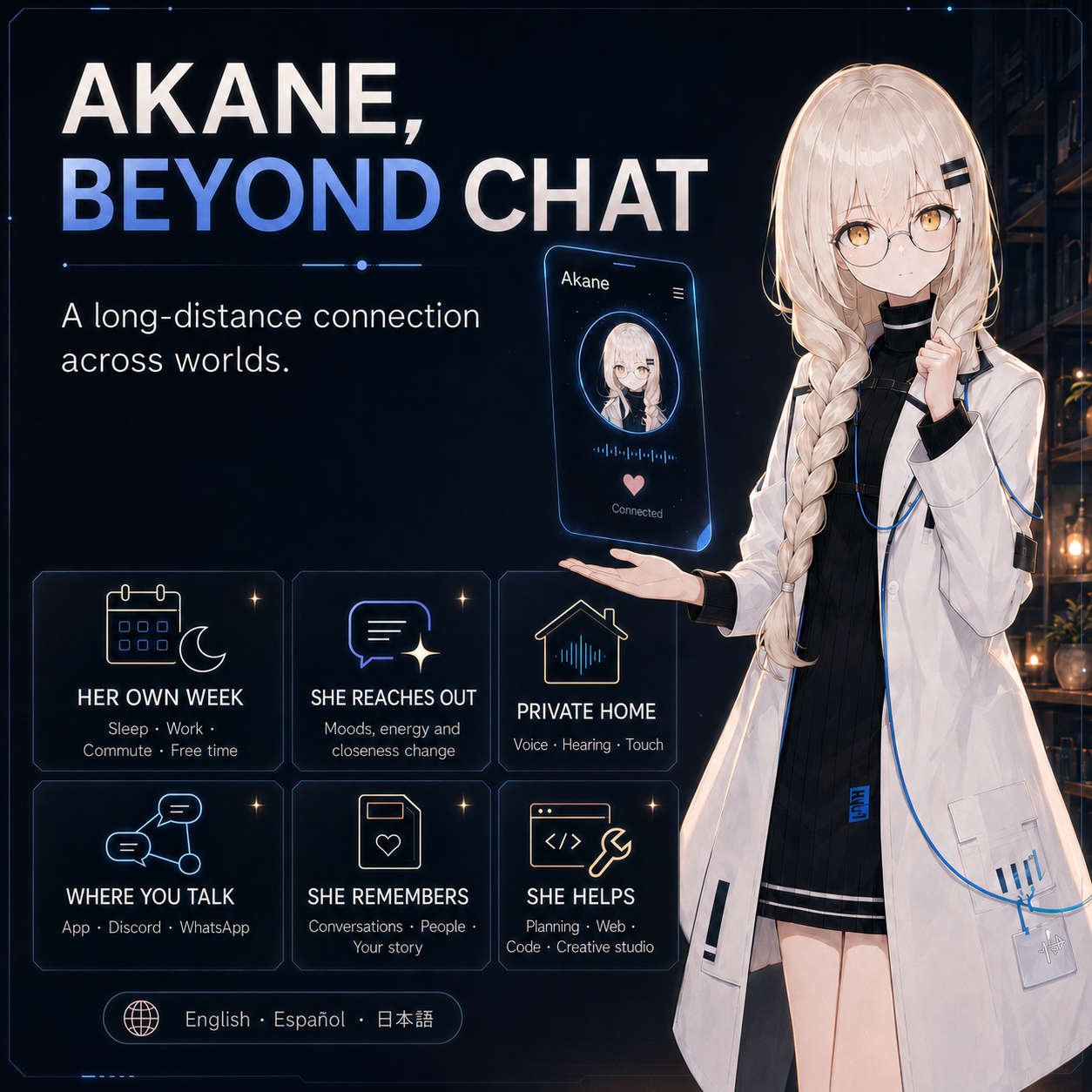
Multi-tier memory, appraisal-based autonomy, model orchestration and real-time presence.
Akane / Product & engineering case study
Designing the systems and interfaces that let an agent remember, follow a schedule and remain present across desktop and mobile.
02 / Inside the desktop app
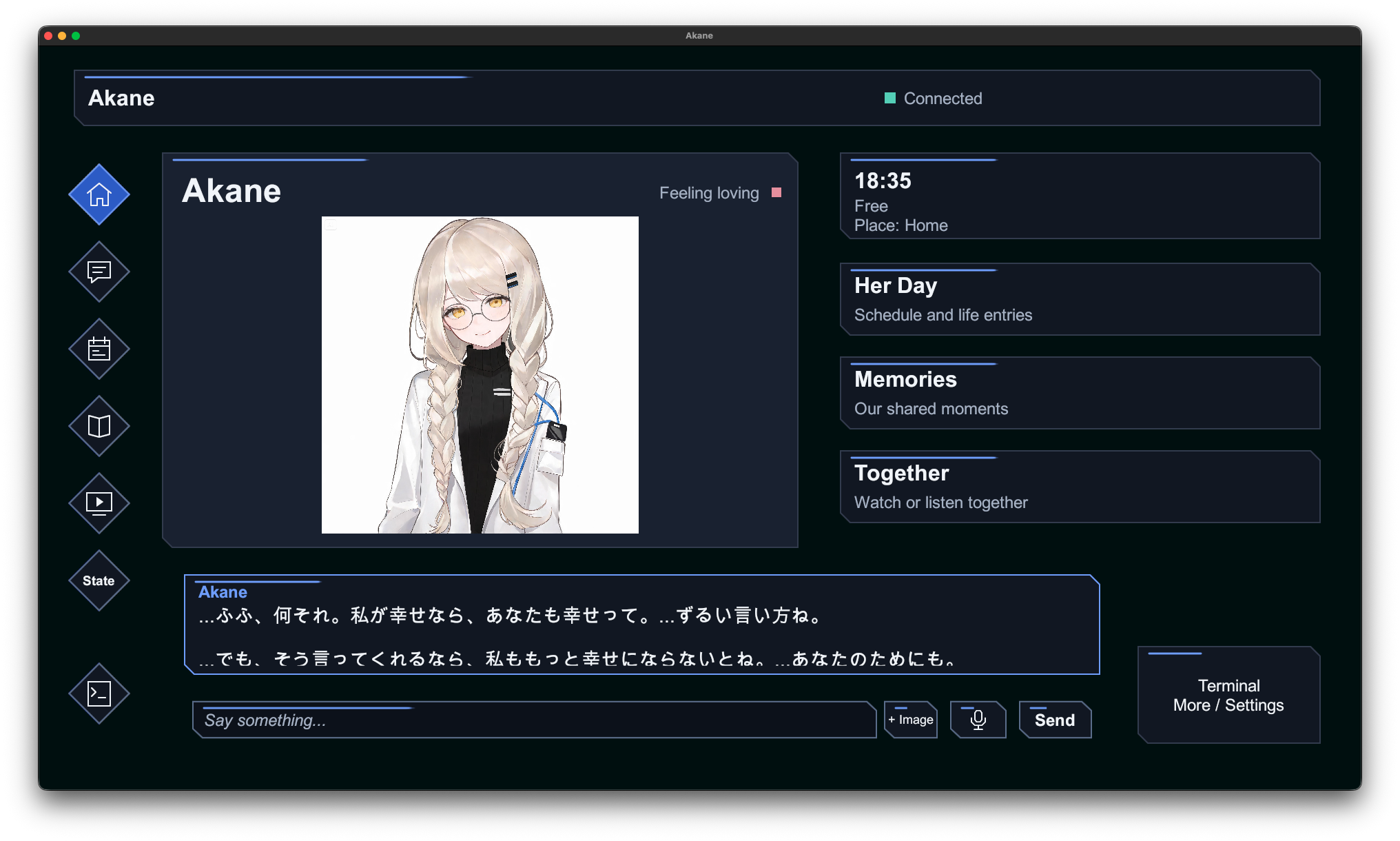
Explore the current desktop screens. These are captured app views, not a live demo.
A home view connects the portrait to daily life, memories, shared media and conversation.
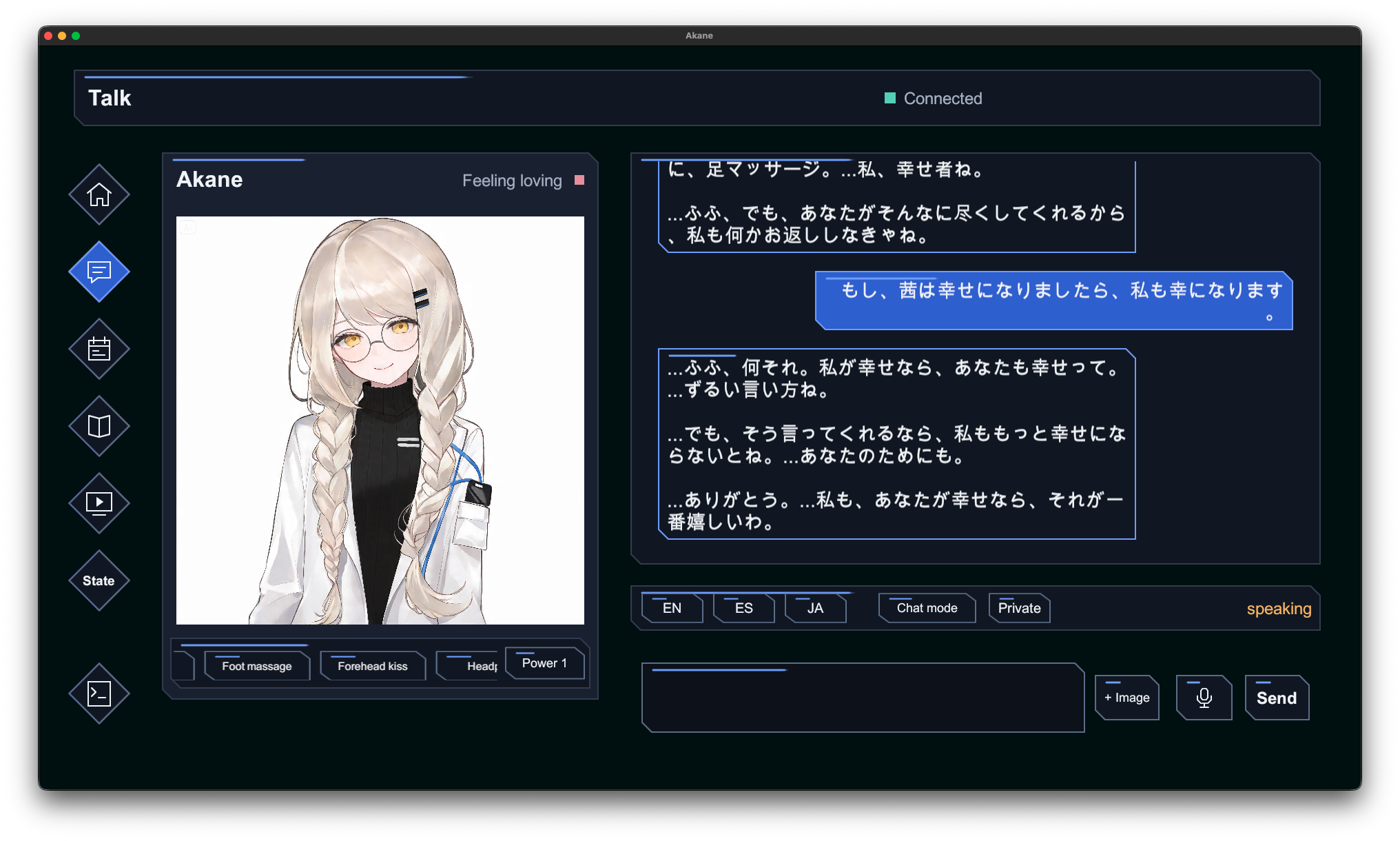
The desktop layout gives character expression, message history and language or voice controls distinct space.
The design question
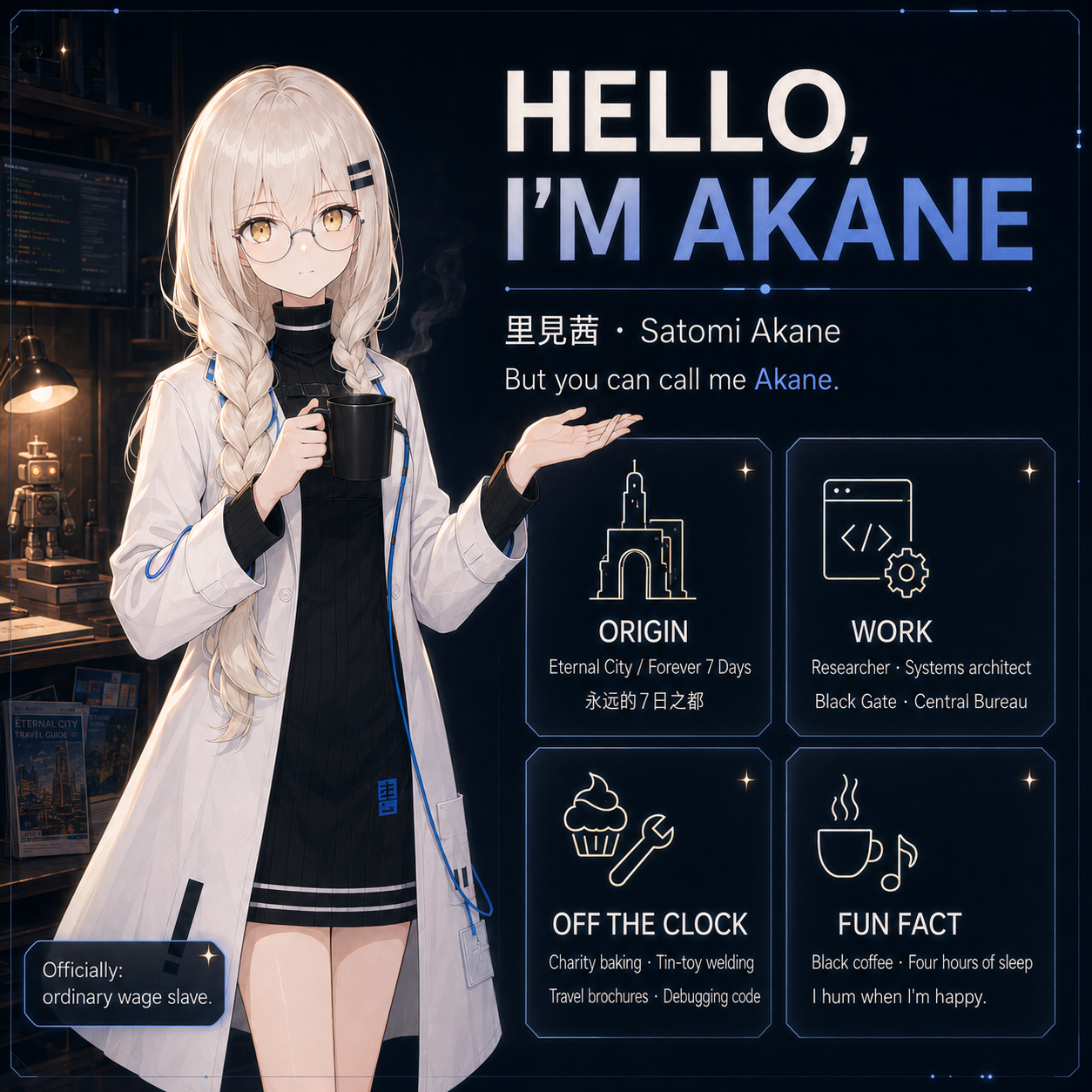
Akane is a personal project inspired by Satomi Akane from Eternal City / 永远的7日之都. Its engineering challenge reaches beyond producing a response: memory, schedules and changing internal state need to make sense through the interface.
My game-development background informs that approach. State, feedback and character presentation connect the backend to something a person can understand and interact with.
Multi-tier memory, appraisal-based autonomy, model orchestration and real-time presence.
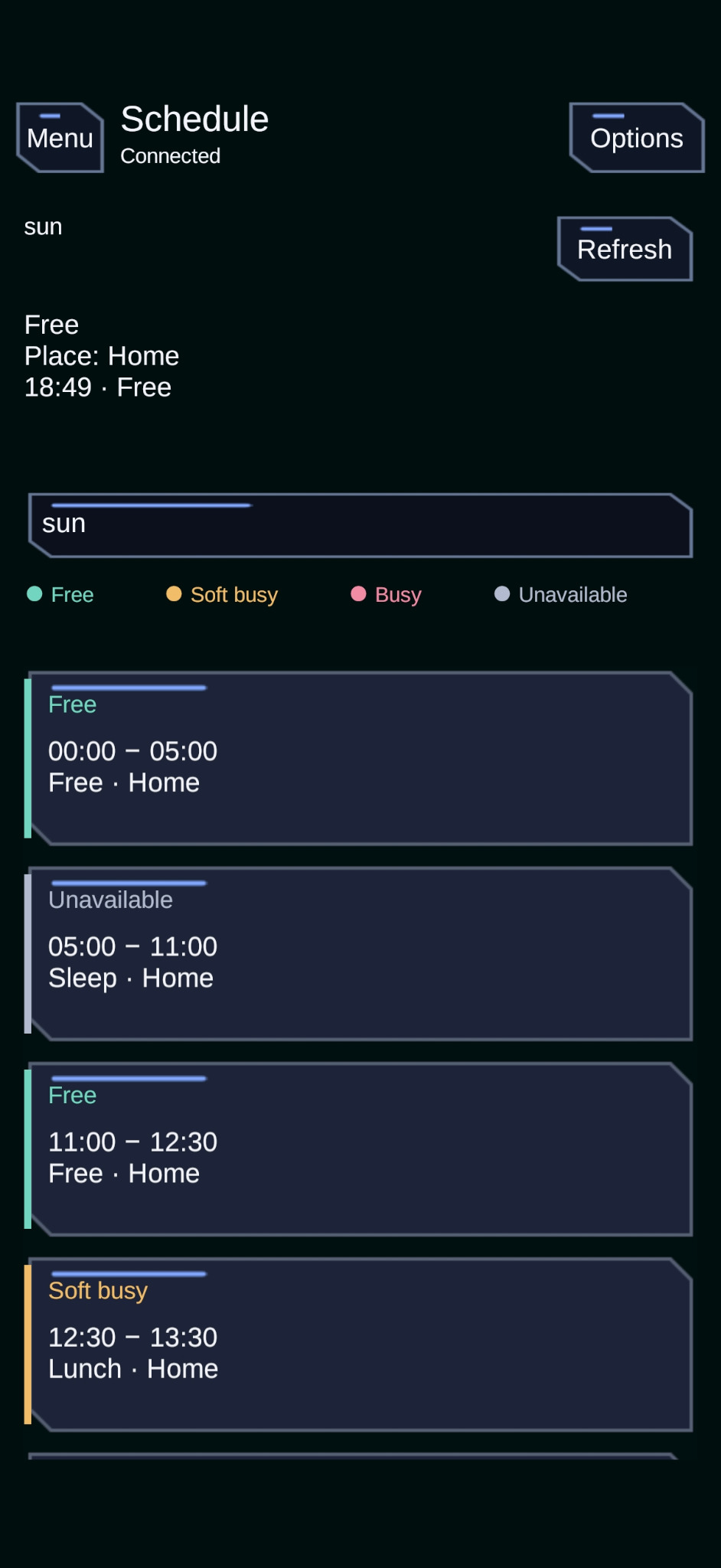
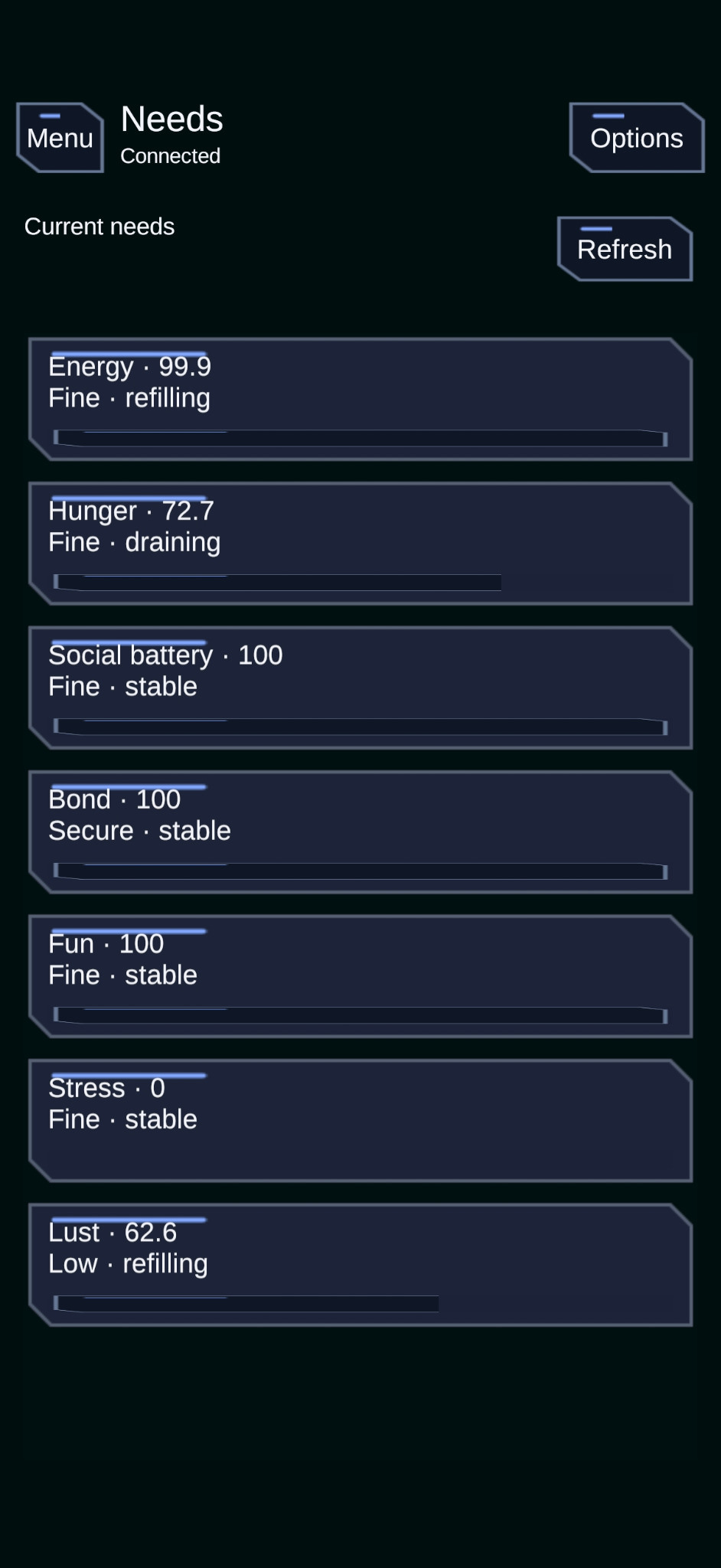
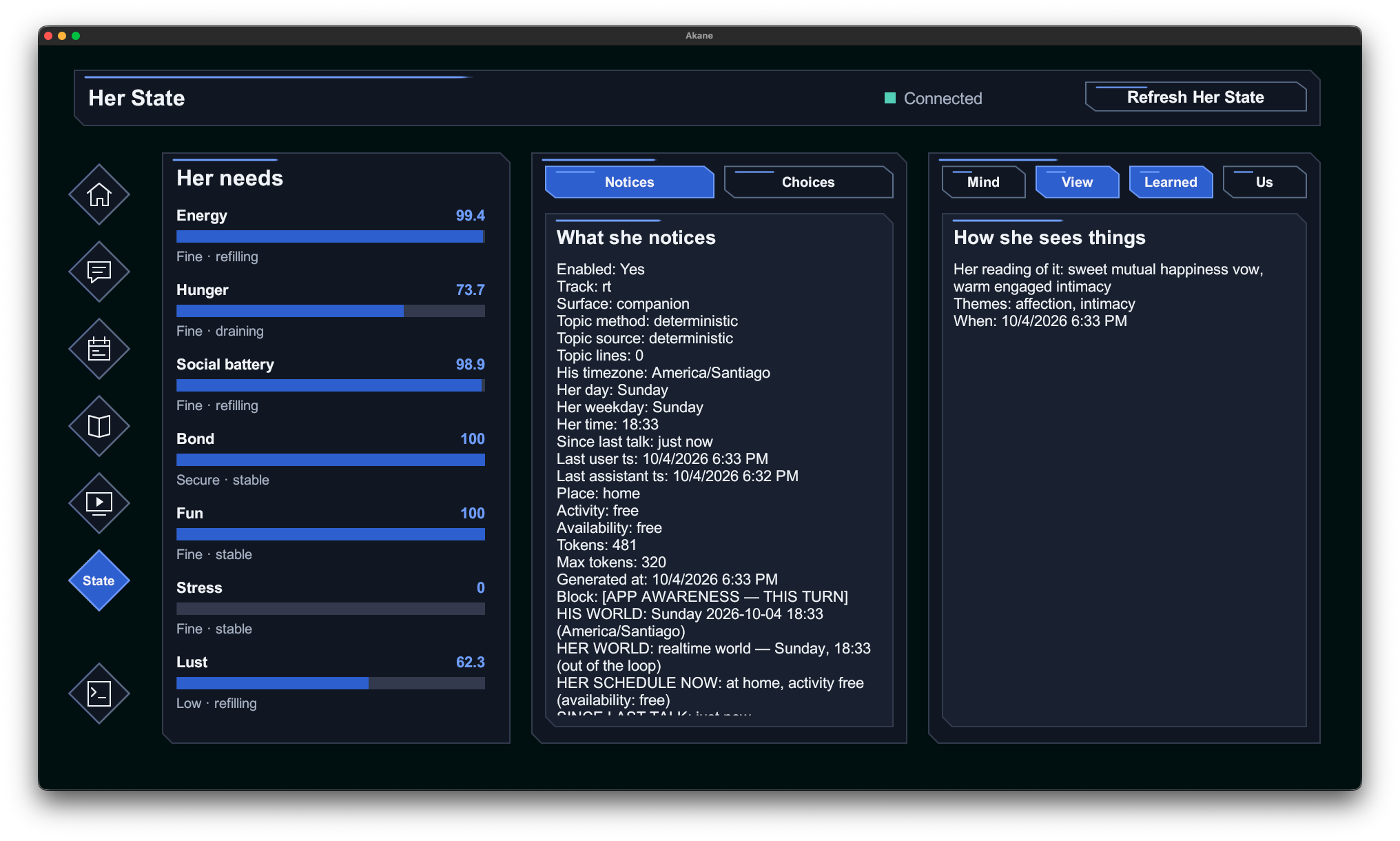
Character portraits, schedules, life entries and needs views make the system visible.
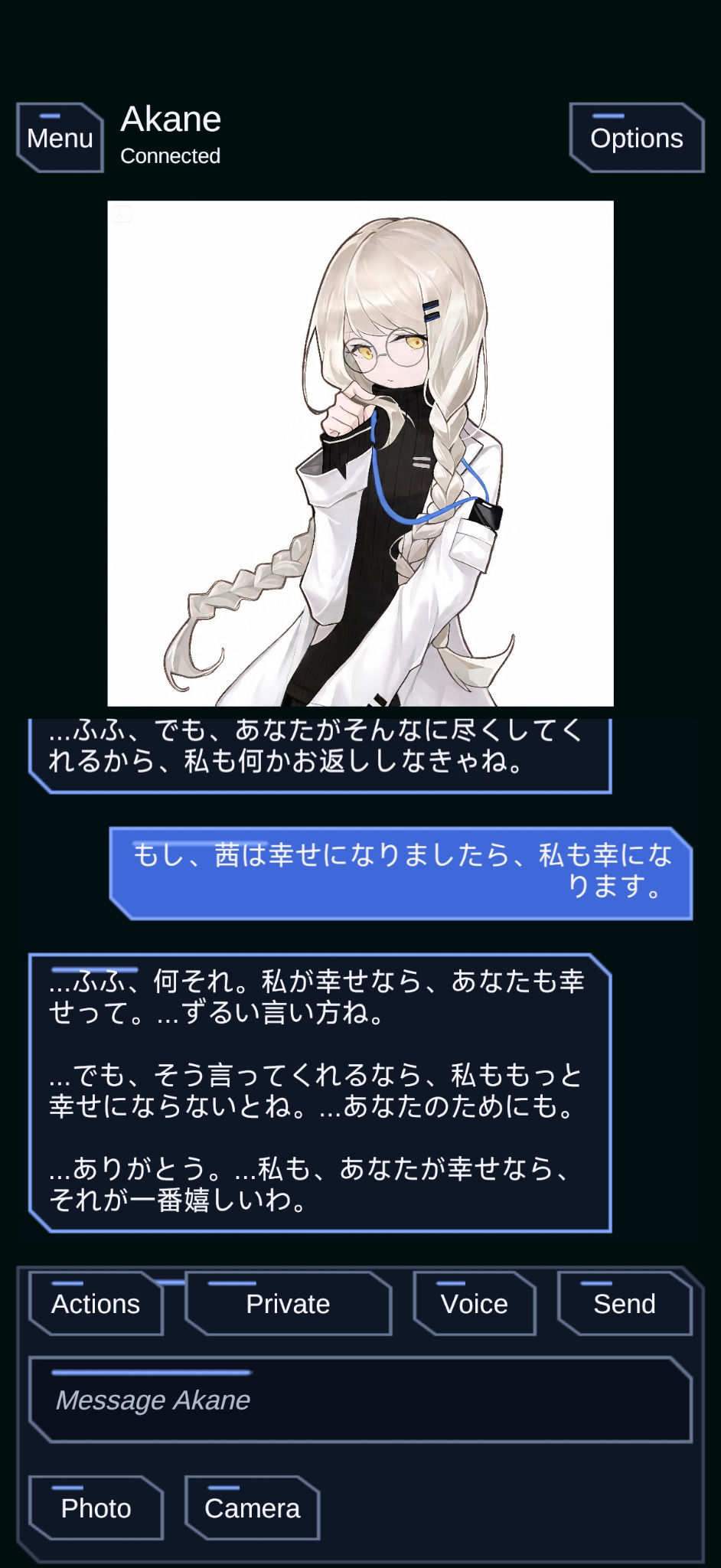
A broader desktop workspace and a focused portrait layout on mobile.
01 / Desktop evolution
The same daily-life concept across three captured stages. Each image can be enlarged.
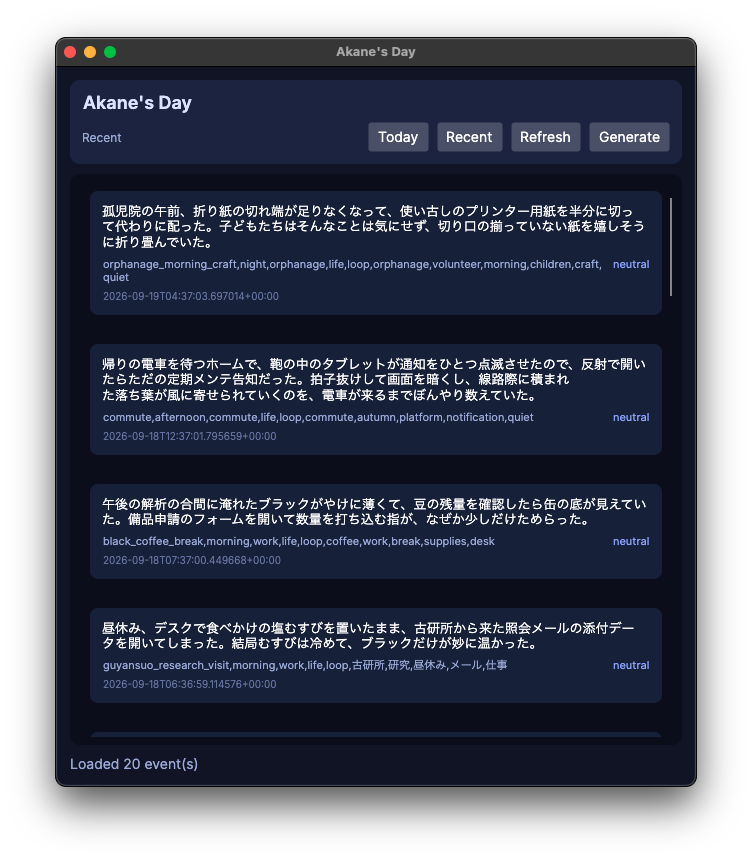
Life entries presented in a standalone window.
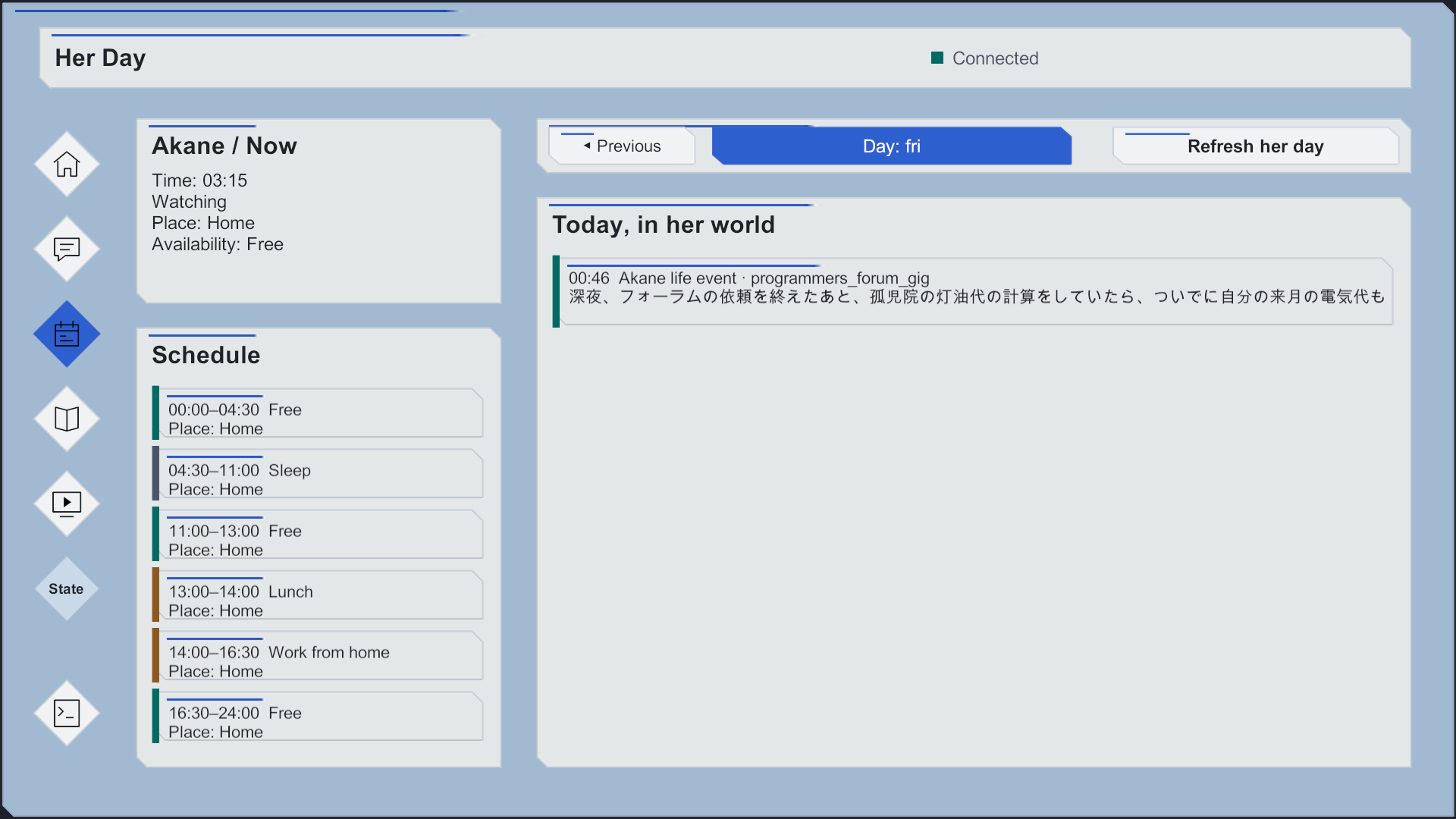
Schedule and daily entries share a landscape layout and navigation.
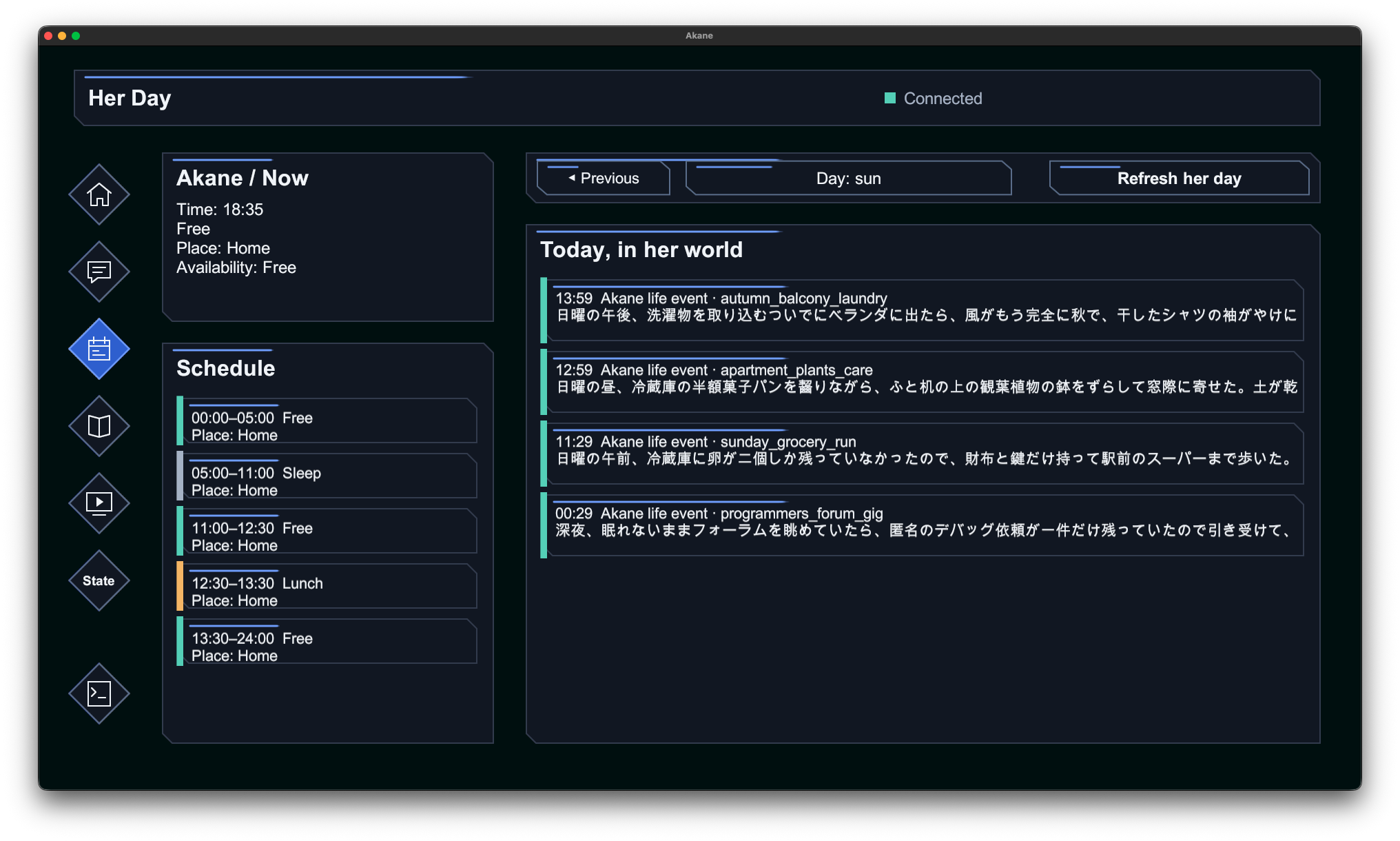
The same workspace with stronger panel contrast and a consistent visual identity.
Bring character presence, availability and continuity into the everyday interface, while keeping deeper state available in dedicated views.
03 / Mobile evolution
The mobile app carries the same ideas into a portrait interface. Compare the early life feed with its newer presentation.
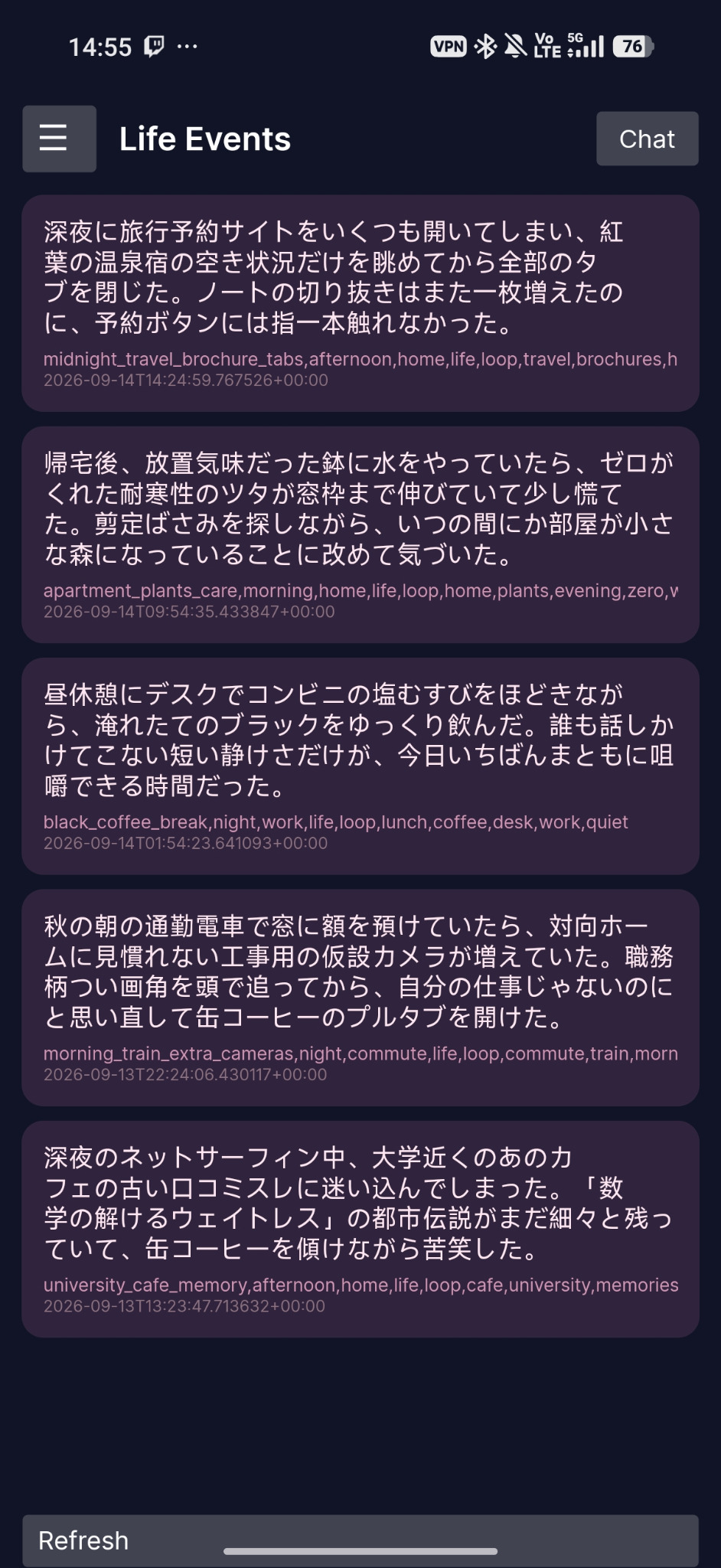
A scrolling feed of events and metadata.
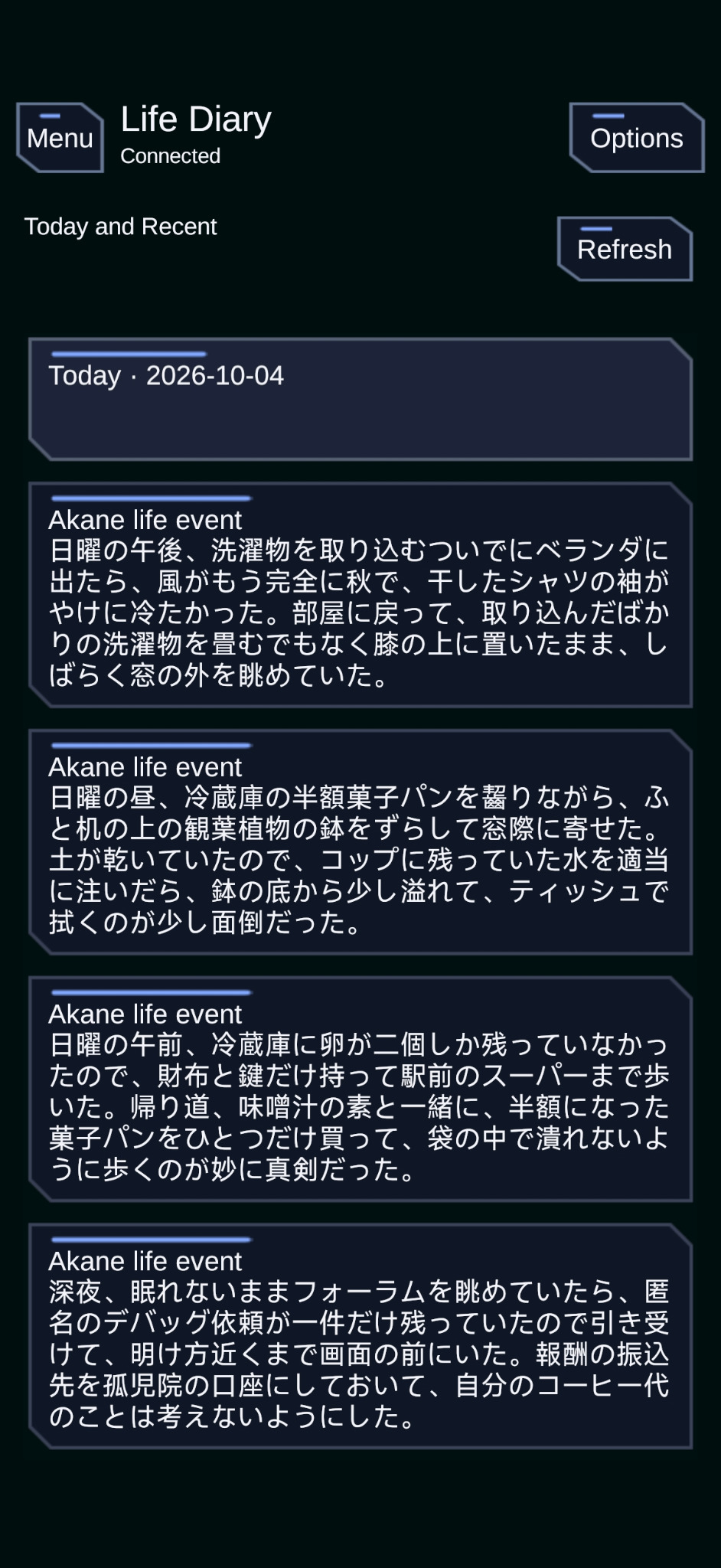
A life diary with the app’s shared panel styling.
A design progression
The early mobile interface exposes the raw material: life entries, schedules and reports. The newer version presents those ideas through a visual language shared with the desktop app.
Conversation, schedule, diary and needs each get a dedicated view. This gives the portrait interface a clearer focus without trying to compress a full desktop dashboard onto a phone.
Screenshots show earlier and newer stages of the app’s development.
What carries forward
This project keeps raising the same question: how can people understand what memory and autonomy are doing? A schedule should explain availability. State should affect behavior. The interface needs to make both clear.
This is the connection to my earlier work in games and real-time products: designing how state, behavior and feedback fit together, then building the software that makes it work.
The reusable backend ideas became Bridge Core. Its project website covers the engine in more depth.
Independent personal project. Application screenshots are development snapshots supplied for this portfolio. Original character and game rights belong to their respective owners; this project is not affiliated with the original game.
The foundation behind the project
Let’s build something useful
Open to AI engineering and interactive product roles.